
Are you planning your dream trip to Japan? That’s wonderful!
To make your journey smoother, learning some essential Japanese phrases for travel is one of the best things you can do.
While you will find plenty of English signs on public transport, Japanese culture is often more reserved. People may not always initiate conversation with strangers. Therefore, knowing a few key phrases can make a huge difference!
In this article, I will introduce some useful Japanese phrases to help you navigate with confidence. By speaking a little local language, you can connect with people and travel with a big smile. Let’s get started!
Category 1: The Magic Words
Sumimasen (Excuse me / I’m sorry)
“Sumimasen” is a versatile word. It can be used when calling out to someone or when apologizing.
It can be used to call a waiter at a restaurant or when you accidentally bump into someone.
Arigatou gozaimasu (Thank you very much)
I’m sure this is the same in every country. Just try to communicate in Japanese.
If you say it with a smile, Japanese people will surely be happy.
Onegaishimasu (Please / I’ll leave it to you.)
It’s the final word when asking for something.
“Onegaishimasu” is used after phrases such as “I want to go to Kinkakuji” and “Please give me this.”
Just adding this word will give you a more polite impression.
Lilia’s Special Tip!
For example, let’s say you ask something and the other person understands.
However, most Japanese people cannot speak English, so even if they understand what you are saying, they often cannot respond.
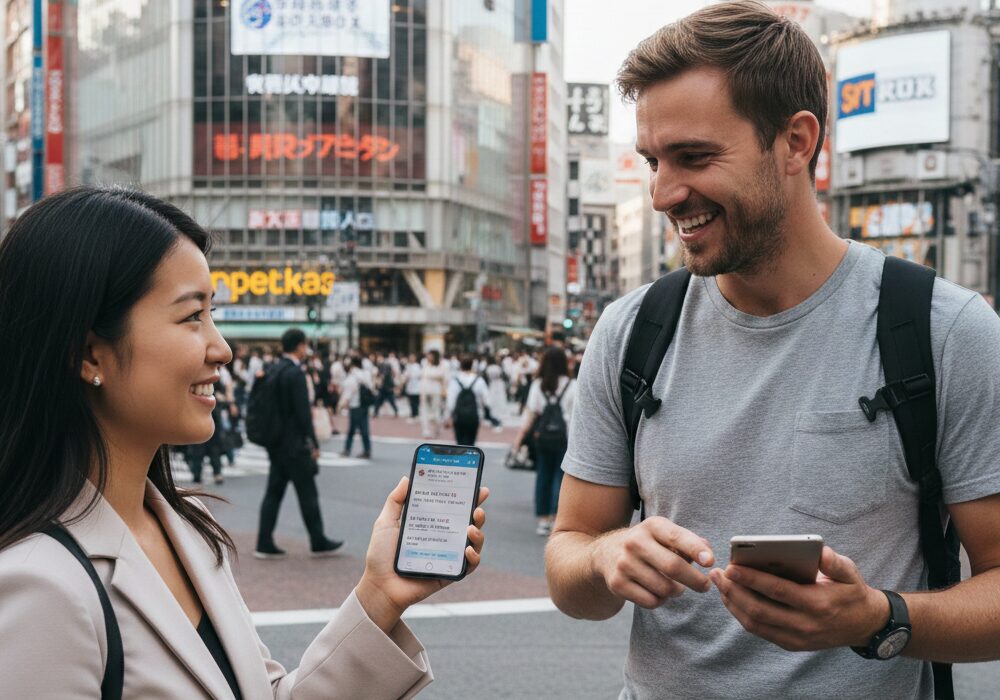
For times like these, be sure to have a translation app ready. Having a translation app will increase the number of people willing to help in the first place.
Category 2: Eating & Shopping
O-kaikei (Check / Bill)
By adding “Onegaishimasu” to “O-kaikei”, it becomes “O-kaikei Onegaishimasu” (Check, please / Bill, please).
Kore wa nan desu ka? (What is this?)
Japan is home to many unique and cute foods and souvenirs whose taste you can’t imagine just by looking at them.
Sometimes the menu has no pictures and only text. In those cases, try asking using this phrase.
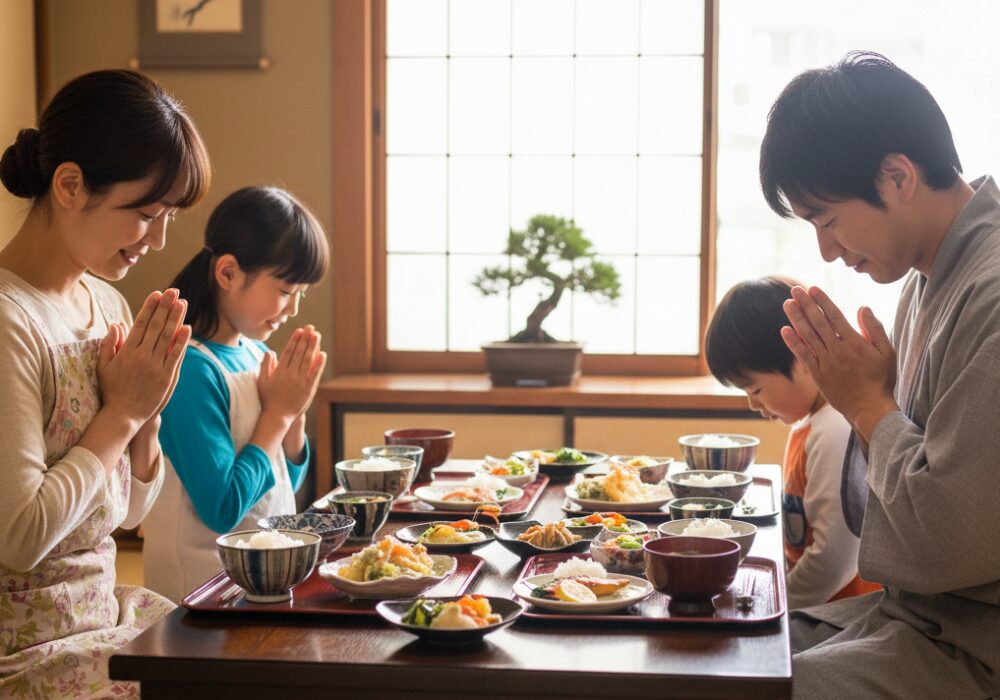
Gochisousama-deshita (Thank you for the delicious meal! (Literally: “It was a feast.”))
When you finish your meal in Japan, try saying this to the staff as you leave the restaurant.
In Japan, where tipping isn’t customary, this is a sign of “the utmost respect and gratitude.”
Lilia’s Special Tip!
In Japan, we start with ‘Itadakimasu’ and end with ‘Gochisousama-deshita.’ These words are like a circle of gratitude for the food, the chef, and the nature. Even if you can’t say it perfectly, your heart will reach them!
Category 3: Getting Help
[Destination] ni ikimasu ka? (Does this go to [Destination]?)
When riding buses or trains, please ask the driver or station staff while pointing to your Google Maps screen or guidebook.
This will prevent the tragedy of boarding a train going in the wrong direction!
Toire wa doko desu ka? (Where is the bathroom?)
This is the most important phrase! Japanese toilets are clean and high-tech (Washlet).
But they can be hidden like a maze inside department stores and stations. If you hear this, you can point and ask for directions.
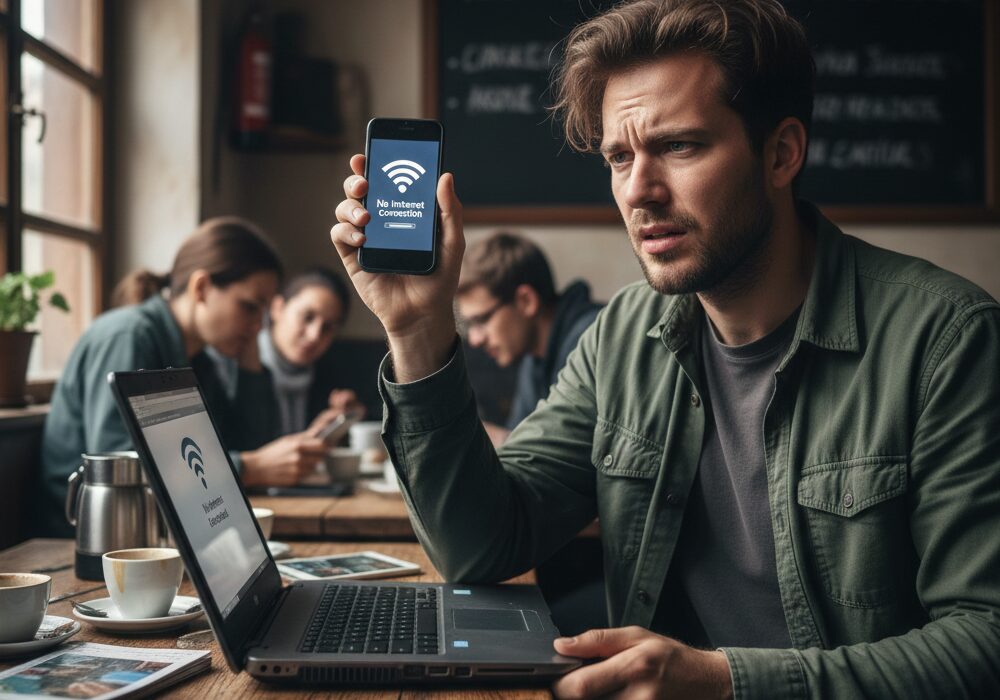
Wi-Fi wa arimasu ka? (Do you have Wi-Fi?)
Japan can be a bit tricky when it comes to finding free Wi-Fi.
If you ask at cafes or hotels, they may show you a card with the password written on it.
Lilia’s Special Tip!
Just a heads up! Unlike some other countries, free public Wi-Fi is still a bit limited in Japan.
While many hotels and major cafes (like Starbucks) offer it, you might struggle to find a stable connection on the streets or in smaller local shops. To stay connected without stress, I highly recommend renting a ‘Pocket Wi-Fi’ or buying an ‘eSIM’ before you arrive. This way, you can use Google Maps anytime to find those hidden ‘kawaii’ spots!
Final Thoughts
Learning even a few essential Japanese phrases for travel will change your experience from being just a ‘tourist’ to becoming a ‘guest.’ Don’t be afraid of making mistakes—Japanese people truly appreciate it when you try to speak our language with a smile!
Combined with your new language skills and a pocket Wi-Fi, you’re now ready to explore Japan like a pro.
If you’re struggling to decide on a travel destination, be sure to check out my travelogue!
Recommended Travelogues
- Adulting at Tokyo DisneySea: My 15-Year Comeback & Fantasy Springs Guide

- Adulting at Tokyo DisneyLand: My 15-Year Comeback Guide

- Atami Travel Guide: Ocean View Onsen & Hatsushima Island

- Dragon Quest Island Guide: Become the Hero in a Real-Life RPG at Nijigen No Mori!
- Ise-Shima 2-Day Itinerary: Why 1 Night is Never
Safe travels, and have a wonderful time in Japan!